
Best Social Media Marketing Strategies for Small Businesses
Many entrepreneurs start social media profiles with high hopes but are unable to derive any benefit from them. They have been posting regularly, but they cannot gain more followers, get engagements, or make sales.
The issue here is not the network itself, but a well-defined strategy behind it.
Through social media marketing, entrepreneurs can access potential clients, build their trust, improve brand recognition, and even make some sales despite having a limited marketing budget. No matter whether you are an entrepreneur who owns a local business, an online business, an IT firm, or another service-oriented firm, you can definitely benefit from social media marketing.
This guide aims at teaching about social media marketing, its benefits, the right social media platforms for different businesses, and effective strategies for 2026.
What Is Social Media Marketing?
Social media marketing is the process of promoting a business, product, or service through social media platforms such as Facebook, Instagram, LinkedIn, TikTok, YouTube, and Pinterest.
Businesses use social media to:
- Increase brand awareness
- Connect with potential customers
- Promote products and services
- Drive website traffic
- Generate leads
- Build customer trust
- Increase sales
Unlike traditional advertising, social media allows businesses to interact directly with customers and build long-term relationships.
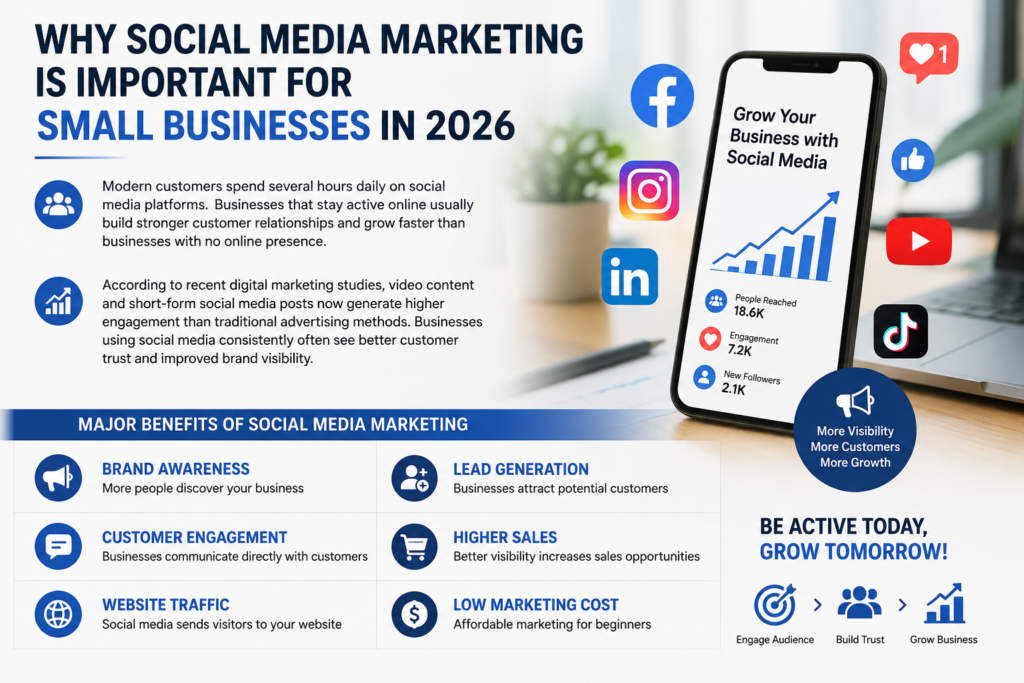
Why Social Media Marketing Is Important for Small Businesses
Modern consumers spend a significant amount of time on social media every day. Before making a purchase or contacting a business, many people check social media profiles to learn more about the brand.
A strong social media presence offers several benefits.
Increased Brand Awareness
Social media helps introduce your business to new audiences. Consistent posting allows more people to discover your products and services.
Better Customer Engagement
Businesses can communicate directly with customers through comments, messages, and interactive content.
More Website Traffic
Sharing useful content encourages users to visit your website and learn more about your business.
Lead Generation and Sales
Social media can attract potential customers and guide them toward making a purchase or inquiry.
Cost-Effective Marketing
Compared to traditional advertising, social media marketing is affordable and accessible for businesses with limited budgets.
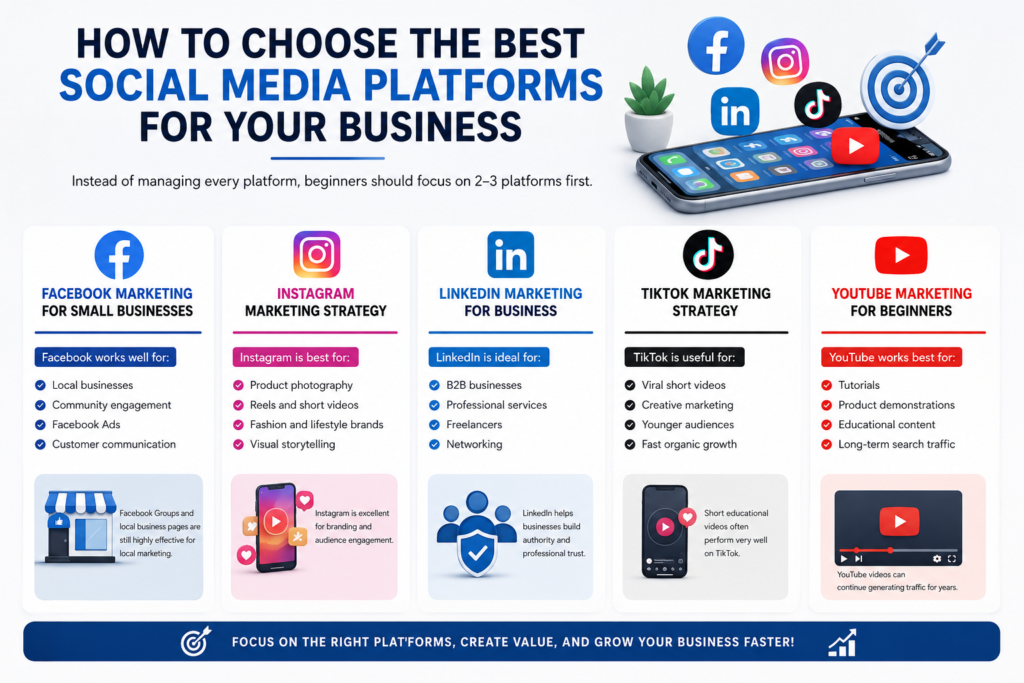
Choosing the Right Social Media Platforms
One of the most common mistakes beginners make is trying to manage every platform at the same time.
Instead, focus on the platforms where your target audience is most active.
Facebook remains a strong platform for:
- Local businesses
- Community engagement
- Customer support
- Facebook advertising
It is especially useful for businesses that want to reach local customers and build community trust.
Instagram works best for:
- Product-based businesses
- Restaurants and cafes
- Fashion brands
- Beauty services
- Visual storytelling
High-quality images, reels, and short videos perform particularly well on Instagram.
LinkedIn is ideal for:
- IT companies
- SEO agencies
- Web development businesses
- Professional services
- B2B marketing
For example, a web development company can share website design tips, case studies, and industry insights to attract potential clients.
TikTok
TikTok is suitable for:
- Short-form video content
- Creative marketing campaigns
- Educational videos
- Brand awareness
Businesses that consistently create useful and entertaining videos can experience rapid growth.
YouTube
YouTube is excellent for:
- Tutorials
- Product demonstrations
- Educational content
- Long-term traffic generation
A single well-optimized video can continue attracting visitors for months or even years.
Best Social Media Marketing Strategies for Small Businesses
1. Create Valuable Content
People follow businesses that provide useful information.
Focus on content such as:
- How-to guides
- Industry tips
- Customer success stories
- Product demonstrations
- Behind-the-scenes content
- Frequently asked questions
For example, an SEO agency can share keyword research tips, while a web development company can explain common website mistakes.
2. Stay Consistent
Consistency is one of the most important factors in social media success.
A simple posting schedule could include:
| Platform | Recommended Frequency |
|---|---|
| 3–5 posts per week | |
| 4–6 posts per week | |
| 2–4 posts per week | |
| TikTok | 1–2 videos per day |
| YouTube | 1 video per week |
Regular posting helps maintain visibility and audience engagement.
3. Use Short-Form Video Content
Short videos continue to generate strong engagement across most platforms.
Content ideas include:
- Quick tutorials
- Industry tips
- Customer testimonials
- Product showcases
- Common mistakes to avoid
Video content is often more engaging than text-only posts.
4. Engage With Your Audience
Social media should be a conversation, not just a broadcasting channel.
Take time to:
- Reply to comments
- Answer messages
- Respond to questions
- Thank customers for feedback
Businesses that actively engage with followers often build stronger relationships and trust.
5. Monitor Performance and Improve
Track important metrics such as:
- Reach
- Engagement
- Website clicks
- Leads generated
- Video views
Analytics help you understand what content works best and where improvements are needed.
Common Social Media Marketing Mistakes to Avoid
Many businesses struggle because they repeat the same mistakes.
Avoid:
- Posting inconsistently
- Ignoring customer messages
- Using low-quality images
- Posting only promotional content
- Copying competitors without a strategy
- Using irrelevant hashtags
- Failing to track performance
Successful businesses focus on helping their audience rather than constantly selling to them.
Social Media Marketing Trends in 2026
Social media continues to evolve every year. Businesses that adapt to new trends often gain a competitive advantage.
Key trends in 2026 include:
- Short-form video content
- AI-assisted content creation
- Personal branding
- Educational content
- Community-driven marketing
- Authentic communication
Consumers increasingly prefer businesses that provide value and build genuine connections.
Final Thoughts
Social media marketing for small businesses is one of the best options for developing an online presence in 2026.
You do not require a huge amount of money or even a big marketing team to be successful. With appropriate choices of social media platforms and creation of relevant content, consistency, and audience interaction, you will be able to develop a good online presence and gain more clients.
Businesses that concentrate on helping their audience and offering solutions to various challenges often tend to become successful in the long run.
Frequently Asked Questions (FAQ)
Q1. What is social media marketing?
Answer: Social media marketing is the process of promoting products, services, or brands through platforms such as Facebook, Instagram, LinkedIn, TikTok, and YouTube to increase visibility, engagement, and sales.
Q2. Which social media platform is best for small businesses?
Answer: Facebook and Instagram are often the best starting points for small businesses because they offer strong audience engagement, broad reach, and affordable advertising options.
Q3. How often should a small business post on social media?
Answer: Most small businesses should post between three and five times per week while maintaining content quality and consistency.
Q4. Is social media marketing free?
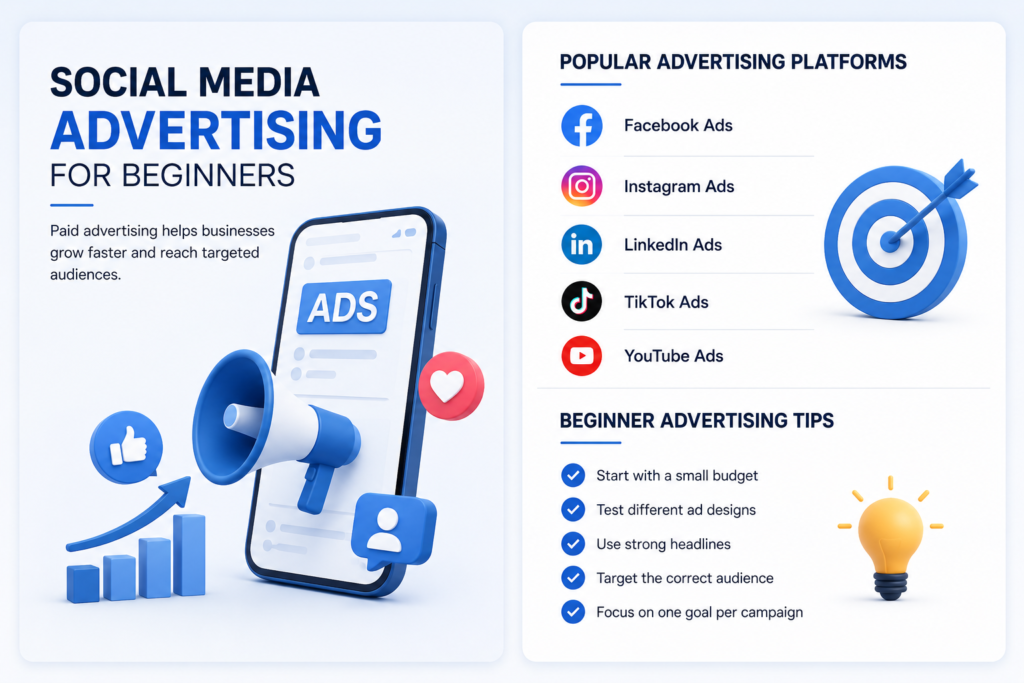
Answer: Creating social media accounts and publishing content is free. However, businesses can use paid advertising to reach a larger audience and achieve faster results.
Q5. What type of content performs best on social media?
Answer: Educational posts, short videos, customer success stories, tutorials, behind-the-scenes content, and helpful tips generally perform well across most platforms.
Q6. How long does it take to see results from social media marketing?
Answer: Results vary depending on the industry and strategy, but most businesses begin seeing noticeable improvements in engagement and visibility within a few months of consistent activity.